
Famous First Lines
On stage with Maggie O'Farrell and her new novel, LAND

“The past is a foreign country: they do things differently there.”
— LP Hartley, The Go-Between
Dear Reader,
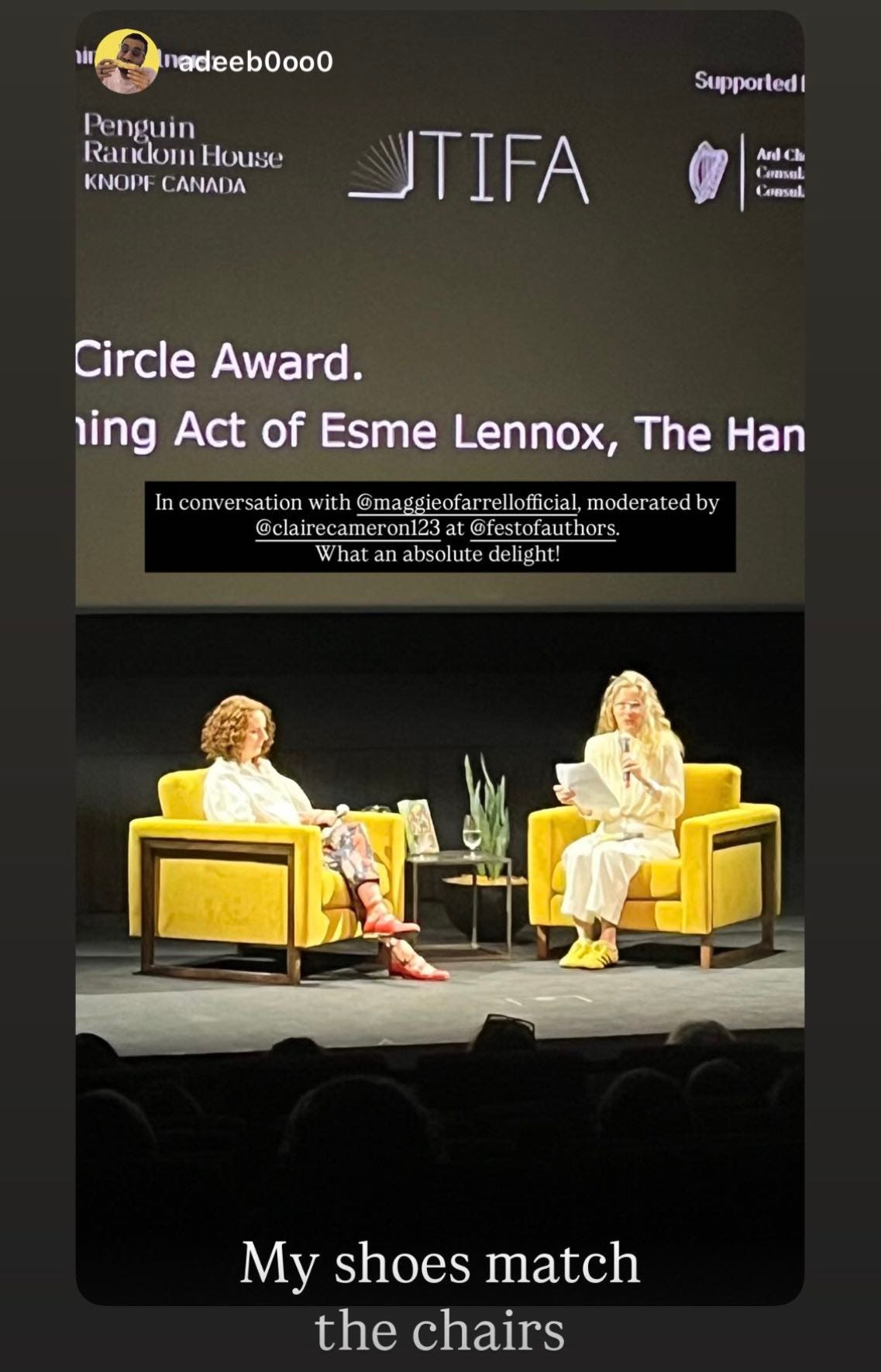
Last week, I interviewed the novelist Maggie O’Farrell on stage at TIFF.
A good interview is like tennis. Your game can be elevated by the person you are playing. Maggie is among the very best. I enjoyed it as much as the audience.
Maggie told us about attending the Academy Awards, she co-wrote the screenplay for the adaptation of her award-winning novel, Hamnet.
The details: Seth Rogan stepped on her toe, there were special vans that transport people who can’t sit in their dresses, and going to the Oscars means you stand in lines for everything.
At the end of our interview, I asked the audience for questions. One woman wanted to know, should she try to write every day? Maggie said there are no set rules. The fun part about writing? You get to make then up. Do whatever works for you.
But before that, we talked about Maggie’s new novel, Land.
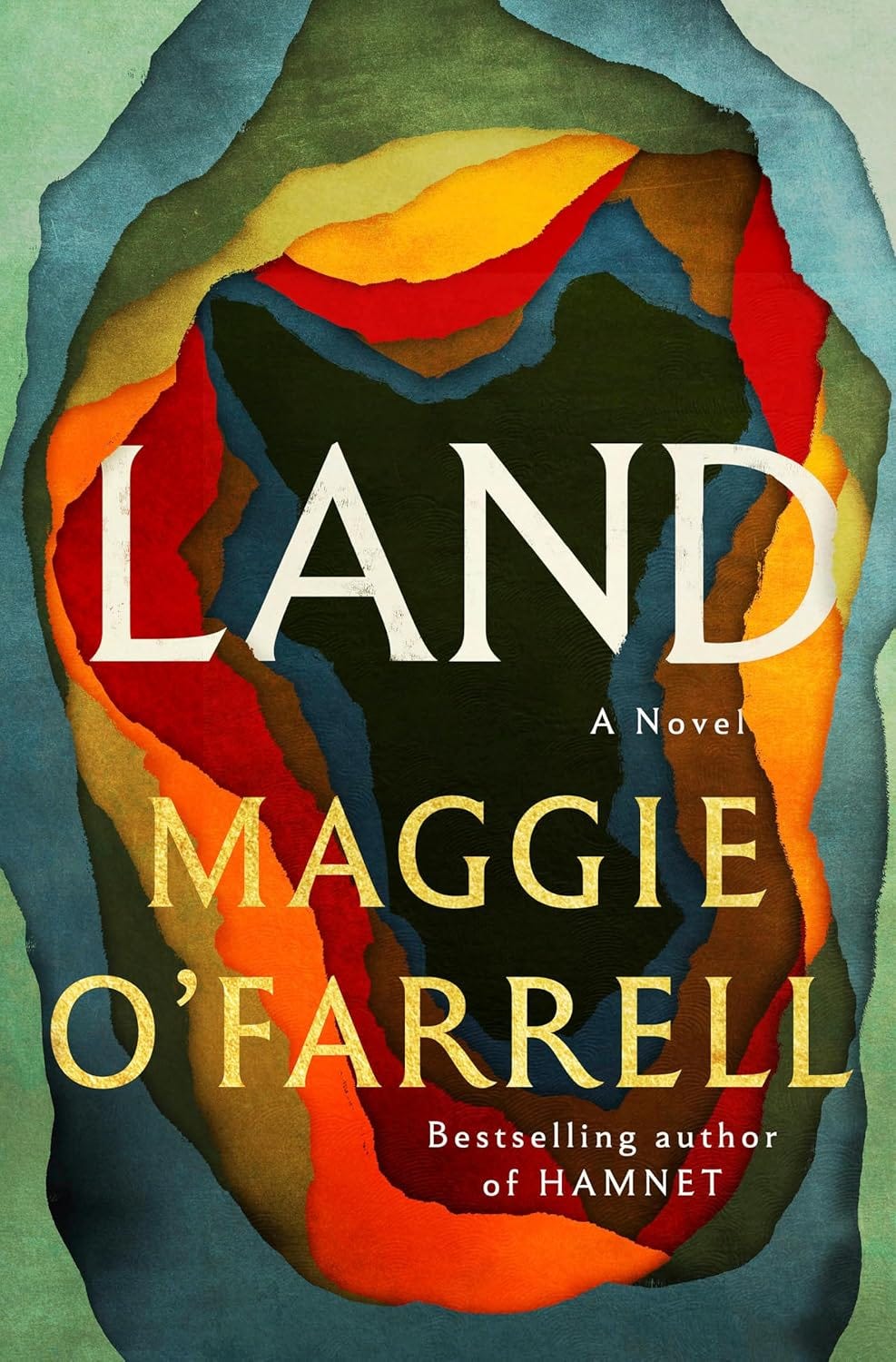
The book opens with Tomás, a geographer, on the west coast of Ireland, “a peninsula stretching into the Atlantic.” He’s making maps for the British, who occupy the country. The year is 1865.
Tomás wants to do more than map features and place names. He’s attempting to capture the ravages of the Great Hunger, the famine that killed over a million people and led two million more to leave Ireland.
Land tells the story of a family trying to find their way after these horrific events.
Maggie told us that her great-great grandfather worked on the ordinance survey. She had wanted to write about him for years, but couldn’t find a way in.
The first line of the novel came to her on a train: “His father was ever a man of few words.”
The story unfolded in her mind from there. It’s a brilliant first line because it speaks to all that comes after, about the difficulty of putting words to horrific events, and hints at how a story can bring the past to life.
“The past is a foreign country,” this is the famous first line from a novel called The Go-Between.
It’s a beautiful way to acknowledge the inaccessibility of the past. It’s a place we can no longer go, we can’t visit, but we can tell stories about it.
What I loved about Land is how Maggie O’Farrell embeds her research — her family history, old maps, scholarly papers — to make the bedrock of her book.
From there, she applies everything I love about her writing, her understanding of human nature, empathy for all kinds of creatures, and insights into the complications and love of a family.
Maggie breathes life into a time that could be lost.
This was my experience of reading Land. I could plant my feet inside this book and walk into the past. I could go to a place we can no longer be.
It’s a wonderful novel. It’s best read in large chunks, I think (50+ pages at a time) so you can immerse. I hope you find time this season.
Enjoy the summer (or winter, for those on the other side). I have a towering stack of books to read. I’ll be back in September.
Yours in books,
Claire
P.S.
Where the River Took Us: A six episode podcast from Texas Monthly (who do great things). It’s about a family who was caught in the flood of the Guadalupe River in Texas on July 4, 2025 — an incredible story about loss and love and how to (or not to) rebuild.
After the Texas floods last year, I wrote a piece about sending your kids to camp: “As a parent, I know how anxious it can be sending a child to camp. As a former counsellor, I know that learning to manage risk is part of growing up” [Gift link]
The Sheep Detectives is a film about talking animals solving a crime. Not usually my type of thing, but the script is perfect. It’s written by Craig Mazin, who created one of the best mini-series, Chernobyl. The two shows, The Sheep Detectives and Chernobyl have absolutely nothing in common. I’m impressed by Mazin’s range.
This is a monthly letter. It’s free. It’s about books I love. I am an author and my latest is How to Survive a Bear Attack. I’m working on a new novel.
I think I’ve read everything by Maggie O’Farrell, except her three children’s books, which I’d love to find. Do you have a favourite of hers?
Would have loved to be there! I adored Hamnet (the book and the film).
The Hartley line always gets me, that the past is somewhere we can't go back to but can still tell stories about. That's most of what I try to do on the page. And "a man of few words" as an opening for a book about a horror too big to name is perfect. On the pile it goes. Thanks for this, Claire.